Blog
Flame-Retardant Cables vs. Fire-Resistant Cables: What to Choose?
Updated on Aug 2024
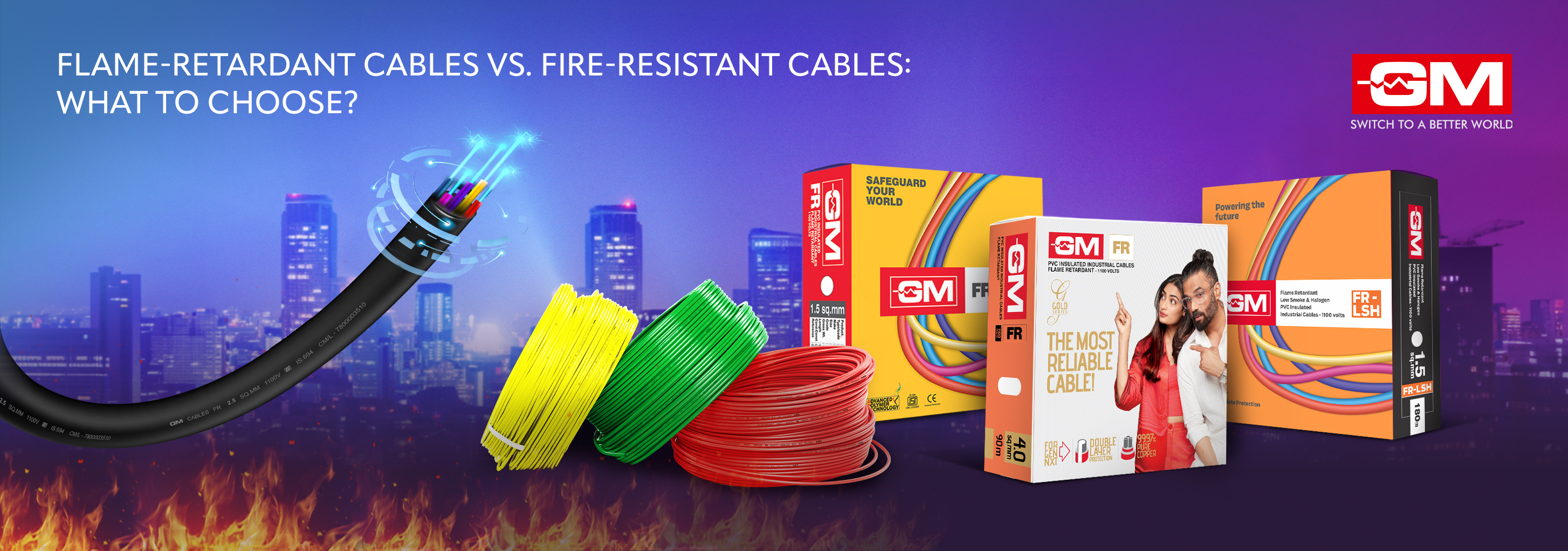
When it comes to residential and commercial spaces, fire is a significant risk that must be taken into consideration. It can happen due to several reasons, including overheating equipment or gas leaks, but electrical issues are known to pose a particularly high threat. These fires are frequently caused by old and worn-out wiring throughout the property, necessitating the complete replacement of the electrical system. To prevent such mishaps, you are offered two options:
- Fire-resistant cables
- Flame-retardant cables
Selecting the appropriate type of cable is crucial for enhancing the safety and resilience of your property against potential fire hazards. If you are unaware of the difference between the two types, this comparison of fire-resistant cable vs. flame-retardant cable will help you navigate through the difference and eventually make the right choice.
What are Fire-Resistant Cables?
Fire-resistant cables are specially designed to withstand extreme temperatures without burning. Ideally, they should continue to function normally during a fire, preventing the spread of flames to the surrounding areas. They are also commonly referred to as circuit integrity cables and are usually 2-hour fire-rated.
What are Flame-retardant Cables?
Flame-retardant cables are designed to operate normally during a fire but will burn slowly. They reduce the amount of heat released to help prevent the spread of fire. In simple terms, these cables inhibit or suppress the combustion process. If the source of the fire is removed, these cables can self-extinguish.
Fire-Resistant Cable vs. Flame-Retardant Cable: Know the Difference
Fire protection is an essential factor to consider when it comes to choosing electrical cables. Choosing wires with no fire safety can be hazardous to human life, making it crucial for you to choose between a fire-resistant wire and a fire-retardant wire for your electrical system. Here’s a comparison that will help you make a sound decision:
Difference in Construction
Fire-resistant cables are made from inherently non-flammable materials. Flame-retardant cables, on the contrary, are treated with chemicals that help slow down or prevent the spread of fires.
Differences in Work
Fire-resistant cables are specifically designed to withstand fire and high temperatures, creating a protective barrier to prevent them from burning or melting. Flame-retardant cables, on the other hand, work by suppressing or extinguishing flames when they come into contact with fire.
Difference in Uses
The 2-hour fire-resistant cables are intended for emergency power circuits in fire pumps and generators. They are also frequently used to improve fire safety in buildings and public places such as hospitals, schools, retail complexes, and underground as well as overground transportation facilities. Flame-retardant cables are low-smoke and fume cables that are engineered and tested to resist flame propagation and spread. These cables help prevent the generation of high-toxic smoke and acid gases, making them ideal for use in environments where fire safety is paramount.
The key distinction between flame-retardant and fire-resistant cables lies in their primary functions. Flame-retardant cables are specially designed to prevent the spread of fire to new surrounding areas. Fire-resistant cables, on the contrary, are made to maintain circuit integrity and continue functioning for a specified duration during a fire. These cables can operate for about one to two hours during a fire. The difference between these ratings pertains to the duration for which the cables can sustain circuit integrity and support life safety operations.
We hope this blog helps you understand the difference between fire-resistant and flame-retardant cables. Both of these cables enhance safety, decrease the potential fire damage to the structure and equipment, and allow more time to step away from the fire. You can choose one based on the specific application and fire safety requirements of your space.
Related Blogs

Hot Showers vs Cold Showers: Which One Is Better For Your Health?
Every day, millions choose between turning the tap to hot or cold, often based on comfort, the season, or habit. But did you know the temperature of your shower has a real, measurable impact on your body, mood, and even recovery? In other words, choo
Read More
Types of Ceiling Fans: Features, Benefits, and Best Uses
Ceiling fans have evolved significantly from being merely functional household appliances to becoming stylish, energy-efficient, and technologically integrated additions to modern homes. From helping you redefine how your space looks to ensuring that
Read More
COB Light vs Panel Light: Understanding the Differences
Lighting has always done more than just light up the space for us. Especially in today's homes, equipped with modern amenities, lighting is not just about another function, but about how it feels. From setting the mood of a living room to ensuring th
Read More
Best GM Exhaust Fans to Buy for Kitchens & Bathrooms in 2025
Good ventilation isn't just about comfort and clean air circulation, but about creating a healthier home environment for your family living in the home. Whether you're dealing with steam from hot showers, cooking odors that linger for hours, or humid
Read More